
Founded in 2019, the RIMPA Global Hall of Fame honours remarkable contributors in the records and information management industry.
As the digital age continues to transform how information is captured, stored, and accessed, the importance of thorough records and information management has never been greater. The individuals celebrated in this Hall of Fame have played a crucial role in setting industry standards, driving innovation, and ensuring the integrity and accessibility of information.
Through their leadership, expertise, and commitment, they have strengthened recordkeeping frameworks, influenced policy and best practices, and fostered a culture of excellence in managing information assets. This Hall of Fame serves as both an acknowledgment of their achievements and an inspiration for future generations of records and information professionals.
ELIGIBILITY
To be considered for induction, nominees must meet all the following requirements and eligibility criteria:
- Be a current or past RIMPA Global member
- Have held continuous professional membership for a minimum of 10 years
- Have at least 15 years of active involvement in the industry, unless the contribution is deemed extraordinary. Sitting members of the RIMPA Global Board cannot be nominated or inducted into the Hall of Fame
- Be in good standing with RIMPA Global at the time of nomination.
An employee of RIMPA Global, who holds membership, cannot be nominated or inducted into the Hall of Fame while employed by the Company.
A member of the awards committee or advisory panel may be a nominee but shall not provide feedback on their induction into the Hall of Fame.
There shall be a maximum of three inductees to the Hall of Fame each year. There is no minimum requirement.
Nominations for induction into the Hall of Fame cannot be self-submitted.
For further information on submitting a nomination, click here to download the Hall of Fame criteria document.

Dr Frank Upward
Frank Upward's name in synonymous with the Records Continuum model, and his pivotal role in developing a unified model of archives and records. Frank was recognised in 2015 with an ASA Fellowship for his immense contribution to archival development, teaching & research. We will forever appreciate what Frank brought to the profession and the legacy he leaves behind, and we honour that legacy by adding him to the RIMPA Hall of Fame.
Dr Upward's amazing contributions to Australian recordkeeping and the archival world seem to have been boundless. Throughout his career as a practitioner, educator and researcher, Records Continuum theorist and writer, Frank had a major impact on the records and information management field in Australia and internationally. His research and writings on Records Continuum Theory provided the world with a new recordkeeping and archival paradigm. His theorising provided the conceptual framework for international and national records management standards and many research projects.
During his retirement, he continued to write and publish, participate in international forums, and mentor research students. New generations of researchers and PhD students continue to develop and extend Records Continuum Theory and to be inspired by his legacy.
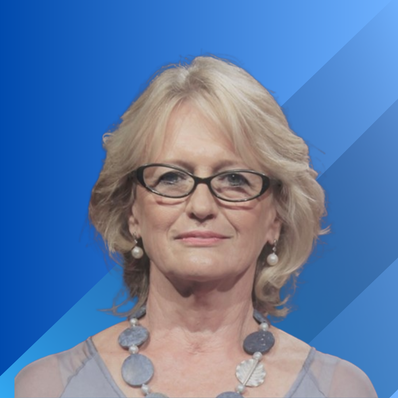
Joy Siller ARIM (Life)
Joy Siller is the Managing Director of Siller Systems Administration, a private information management consulting business.
Joy has almost 40 years’ experience in the information management field having initially started in the NSW State Archives Office. She has undergraduate and post-graduate qualifications in library science and business/marketing; has worked full-time as a consultant, part-time as an academic at university; and chaired and participated in various committees and boards.
Joy has been a member of RIMPA for many years and, as well as presenting at many of its conventions and seminars, was a board member and NSW branch councillor.
Expertise
- Government and private sector information asset management (content rather than asset infrastructure)
- All aspects of compliant recordkeeping
Knowledge
- All levels of Government
- Corporate sector
- Government information management policy and standards
- Corporations law
- Privacy legislation
- Cultural sensitivities
- University sector
- Library science (theoretical)
- Politics
Particular skillset
- Research
- Marketing
- Report writing
- Facilitating, lecturing, presenting
- Business management
- Email:
- [email protected]
- LinkedIn:
- https://linkedin.com/in/joy-siller-2437b310/
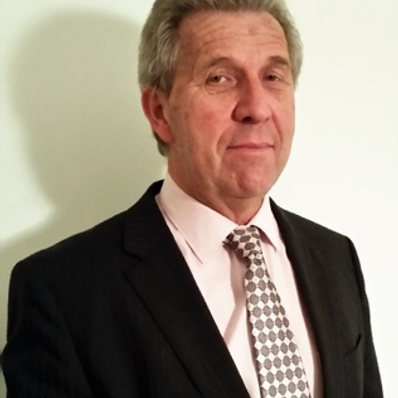
Chris Fripp FRIM (Life)
Chris Fripp has been a member of RMAA/RIMPA Global for over 40 years and has held every leadership role within the NSW Branch. Joining the NSW Branch Council in the early 1980s, Chris was responsible for the Membership and Status Committee, organised branch events, and served as Branch Treasurer. Chris was also elected as NSW Branch President, a position he held for six years.
Following this, Chris was elected as NSW Local Government Chapter President, again serving in the role for six years. During his tenure, Chris developed and established the regional organisation of council groups for records management. The purpose of these groups was to encourage the sharing of ideas and provide training opportunities for councils across New South Wales.
In 1999, Chris was elected National President. During his term, and with the support of the Board, he dedicated himself to advancing the RIMPA Strategic Plan through a number of significant initiatives, including:
- Encouraging New Zealand to join RIMPA Global
- Changing the name and logo from RMAA to RIMPA Global.
- Developing a new paid Executive role.
- Decentralising branch finances and membership.
- Reducing the number of Board members from 16 to 8.
- Leading discussions on the potential amalgamation of RMAA and ASA.
Chris served a further six years as National President, a role now known as Chair of the Board. Across his time as NSW Branch President, Local Government Chapter President and National President, Chris dedicated 18 years to leading the Association.
Chris attained the professional status of Fellow in 2005 and became a Life Member in 2006. He was also the inaugural recipient of the J. Eddis Linton Outstanding Individual Award in 1999. In 2012, Chris was recognised by Worldwide Who's Who for excellence in records and information management.
After more than 20 years of serving in senior leadership roles within RIMPA, Chris turned his focus to education, developing records and information management courses and delivering them throughout Australia.
Chris is a qualified workplace assessor and has been training professionals on behalf of RIMPA for more than 20 years. Courses delivered by Chris have included Certificate III and IV in Records Management, the Diploma of Records Management, the Advanced Diploma of Records Management, and the Advanced Diploma of Management.
In addition to these formal qualifications, Chris presented a series of RIMPA webinars on a wide range of records and information management topics. He also delivered introductory, strategic and archival management courses at venues across Australia. Alongside his training contributions, Chris authored numerous articles for IQ.
For many years at RIMPA National Conventions, Chris served as an ambassador, welcoming first-time attendees, introducing them to fellow delegates, and helping them navigate the convention program. He fulfilled this role for 10 years.
Chris has also presented papers and keynote sessions in every Australian state and territory, as well as internationally in New Zealand, Dubai and Singapore.
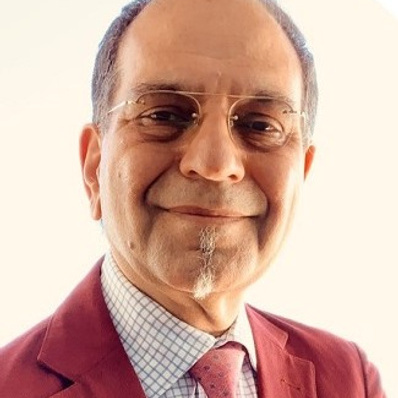
David Moldrich FRIM (Life)
David Moldrich has a long association with RIMPA and a colourful history in the records and information management industry reaching all the way back to 1978 when he joined the then RMAA and the Victorian Branch. During his time on the Branch (23 years!) he held many positions: Functions Coordinator, Technology and Industry Standards, Branch President – two stints in this role – the 1st was for 9 years and then another 6, 5 years later. David was also elected as the Victorian Director in the 80’s and again in the 2000’s. In 2004 he headed up the RMAA National Convention.
David has been significantly involved in the development of standards and has held the titles of Chair of Standards Australia and Chair ISO. David has moved up through the membership folds starting as an Associate in 1978, becoming a Chartered member in 1990 and attaining Fellow status in 2010. In 2006 David was honoured with a Medal of the Order of Australia. After a short break from serving on RIMPA Branches, in 2018 David joined the NSW Branch and then moved back to Victoria and once again joined the Vic Branch. David also put his hand up and joined GABA in 2018.
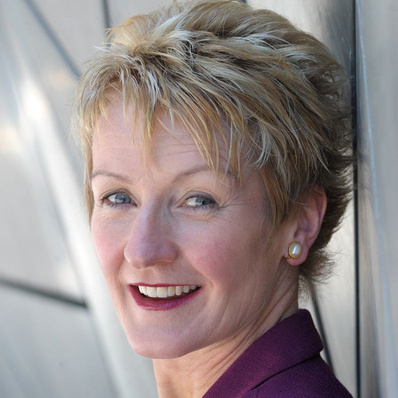
Judith Ellis CRIM (Life)
Judith Ellis is an icon in the records and information management industry. She has held an association with RIMPA since the 80’s where she held various positions within the Company including a Councillor on the Victorian Branch, National Convention Executive Committee member and organiser and Editor of the Victorian Branch journal. In the 90’s Judith’s involvement increased, and she held positions of Federal Chair (Membership Status & Ethics), Federal Public Affairs Officer, Federal Director, Victorian Vice President, Editor of the national magazine InfoRMAA and a member of the National Technology & Industry Standards Committee.
Judith has authored many articles for the various RIMPA publications over her long involvement and delivered countless presentations. She has been the winner of the J Eddis Linton Outstanding Individual award and in 2014 was awarded Life membership.
Tom Lovett FRIM (Life)
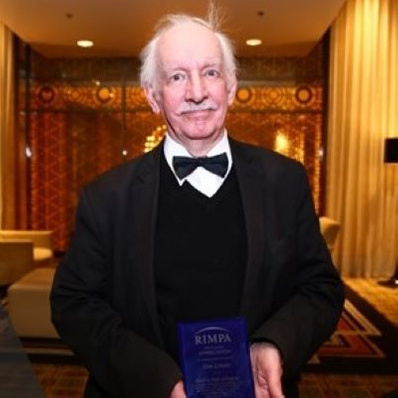
Tom Lovett founded the Records Management Association of Australia in March 1969 because he saw a gap that needed filling for an industry that was being ignored. After his discharge from Australian Army Intelligence, he became an office systems consultant in Sydney for a multinational corporation. He was soon promoted to manager of the South Australian systems division, and then the Victorian systems division in Melbourne. He did a lot of work in three states, working with filing clerks and records clerks in business and government organisations and witnessed first-hand how badly those in this sector of industry were treated – they were overworked, poorly paid, and poorly equipped in under-staffed records sections. When he left the company, he had a determination to help them by forming an Association for records and filing clerks, enabling these workers so they could come together and start helping themselves and have their own training courses.
Tom spoke to university professors and business leaders to gain support for the creation of the association and the development of industry specific courses, and they all said it couldn't be done. An association of filing clerks was impossible to start. One professor of management told Tom, “Universities won’t touch Records Management with a barge pole!” Tom had spent four years working with members of the industry and knew they were hungry for improvement and were good employees. All they needed was a little help and some recognition. Through his position in the army, he learnt the skills of classification and the organisation of information when he was put in charge of re-organising the master files for the School of Military Intelligence. With some of the knowledge gained in the School and more knowledge gained from books and from being a member of the American Records Management Association (ARMA), Tom became the editor of Australia's national magazine, “Modern Office”. Through this he was able to promote the idea of a new Association in monthly articles and editorials.
A three-day records management training workshop that was held in Sydney was delivered and attended by about a dozen records officers from government and business organisations. These delegates became the source of members to form a Steering Committee for the Association and within a year, the Records Management Association was formed. The membership varied but included Dawn Winter from Prospect County Council and Ron Britton the Chief NSW Archivist. Tom was elected foundation President and held office until a change in the constitution in 1971. Tom continued in the industry teaching the RM course he developed, until 1978.
Jim Shepherd CRIM (Life)
Barbara Reed FRIM (Life)
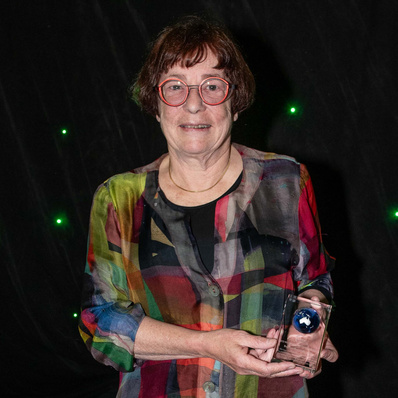
Barbara, through her dedicated efforts spanning four decades, has emerged as a trailblazer whose impact on the industry's evolution and advancement is truly noteworthy.
Barbara demonstrates her aptitude not only for education but also for nurturing the next generation of information management professionals. Her influence extends beyond the confines of traditional classrooms. Through formal and informal training initiatives, she imparts knowledge and insights, contributing to the continuous development of individuals in the field.
Barbara has played an integral role in shaping industry standards and guidelines, cementing her status as a respected thought leader and since 2016, she has chaired the Standards Australia IT21 Committee.
In recognition of her exceptional journey, transformative influence, and enduring commitment to the records and information management field, Barbara Reed is celebrated as an exemplary figure whose legacy will continue to shape the industry for generations to come.
Peter Smith FRIM (Life)
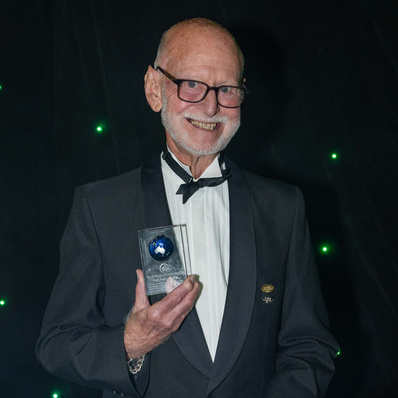
Peter Smith is a pioneer of the establishment of the RMAA formed in 1969. He joined the newly established NSW Branch Council in the early 1970’s, the first President of the NSW Local Government Chapter and has had ongoing involvement with RMAA/RIMPA and the records and information management industry since then. He has recently joined the RIMPA Owl Committee and has been a member of the RIMPA Panel in 2022 to accredit information management courses at Charles Sturt University.
Peter’s focus has been on education through developing TAFE records management courses and the teaching of these courses. He served on many committees and working groups to review and develop teaching courses and competency standards across various industry sectors.
Peter has had a long history of serving on the RIMPA Federal Council, now known as the Board, as Federal Treasurer and Secretary, and as Federal President from 1985 to 1988. He was elected in 1989–1990 as President of the then-International Records Management Council.
Peter is a Life Member and has the professional status of Fellow. He was awarded the International Emmett Leahy Award in 1996, being the first person to be given this award outside North America in its 40-year existence at that time. Peter was also awarded the J. Eddis Linton Outstanding Individual Award in 2000.
Peter led many committees, including:
-
Become a member of the Standards Committee to develop the Records Management Standards in 1988.
-
Become Secretary for the National Committee to develop Competency Standards in conjunction with the Arts Training Council of Australia in 1992.
-
Appointed Chair of the NSW State ALIA Education Committee in 1994
Peter also delivered a range of papers in all states and territories in Australia and overseas countries such as, England, Scotland, New Zealand, Philippines, and France.
Thomas Kaufhold CSRIM CRIM (Life)
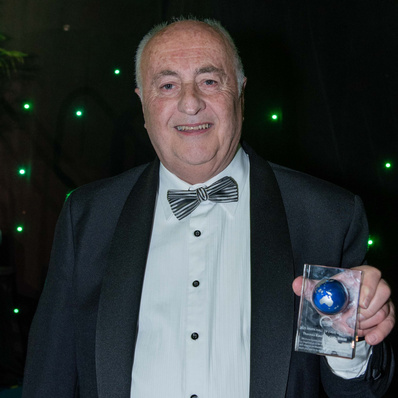
With a remarkable career spanning over 55 years, Thomas Kaufhold stands as a stalwart figure in the records management industry. His journey within RIMPA reflects not just a professional association but a deep commitment to a community he has helped shape and nurture.
Thomas's extensive involvement in RIMPA is nothing short of extraordinary. From serving as Branch Councillor, Branch President, Branch Vice President, and Branch Treasurer to being a significant presence on both the RMAA Federal Board and RIMPA Board, his multifaceted roles have been integral to the organisation's growth. His dedication was not just recognised; it was celebrated through various awards, culminating in his induction into the RIMPA Hall of Fame.
For an astounding 47 years, Thomas dedicated himself to RIMPA, dedicating countless hours to its progression and sustainability. His mentorship has guided many, and his leadership has been a beacon for all involved. His impact is not merely measured in roles and titles but in the inspiration he provides to the entire RIMPA community.
Thomas Kaufhold's legacy is one of unparalleled dedication and passion. His story is intertwined with the very fabric of RIMPA, reminding us all of the power of commitment, mentorship, and shared purpose.
Sue McKemmish ARIM (Life)
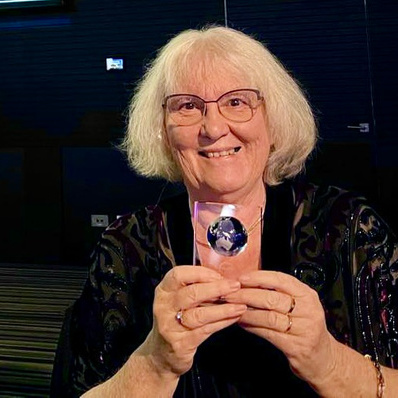
Over a 50-year career in records and information management and archives, Emeritus Professor McKemmish has held key roles at the National Archives of Australia and the Public Record Office Victoria before joining Monash University in 1990. Together with colleagues, including fellow Hall of Fame members the late Dr. Frank Upward, Barbara Reed, and Judith Ellis, she was instrumental in building a globally recognised education and research program in Recordkeeping and Archives at Monash University.
Much of Sue's research has been supported by ARC Linkage partnership grants, which have focused on identifying the recordkeeping, archival, data, and information needs of partner communities, organisations, and institutions. These include RIMPA Global, the National Archives of Australia, the Public Record Office Victoria, the Australian Society of Archivists, Australian Indigenous communities, and Care Leavers, as well as advocacy and service organisations in the Out of Home Child Care sector.
Emerita Professor Sue McKemmish
Information Empowered Communities Lab
Faculty of IT
Monash University
Email: [email protected]