
IM Blog: Disposing of the Ark: Why ‘safe somewhere’ is not an information management strategy
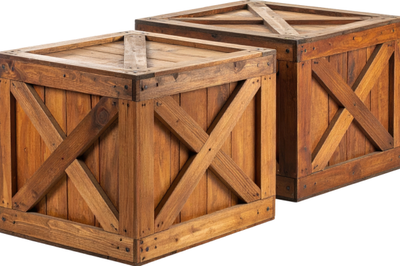
At the end of Raiders of the Lost Ark, the Ark is sealed inside a wooden crate and wheeled into an immense government warehouse to join thousands of similar unnamed crates. It is technically safe. It is also, for all practical purposes, lost again.
For records and information managers, the scene is uncomfortably familiar. Our organisations can hold enormous volumes of information across shared drives, electronic document and records management systems, business systems, email, OneDrive and other repositories. We may know the information exists somewhere, but can we find it, understand it, protect it and account for the decisions made about it? If not, storage has become a very expensive form of forgetting.
Safe is not the same as managed
Disposal is often treated as a polite synonym for destruction. It is much broader than that. Disposal includes authorised transfer to an archive as well as lawful destruction when information has reached the end of its life. Its purpose is not to make information disappear; it is to ensure the right information remains available for the right reasons and that material with no continuing value does not linger indefinitely.
Systematic disposal creates order. Information of enduring value is identifiable, protected and retained. Information that no longer needs to be kept is destroyed under the appropriate authority. The result is not an empty warehouse. It is a warehouse containing a collection whose contents can be trusted and used.
Disposal needs evidence
A defensible disposal process leaves a trail. We need enough metadata to explain what the information was, who created or owned it, which disposal authority applied and when the disposal action occurred. Without that context, we may have completed an action but be unable to prove that it was appropriate.
This is what turns disposal from an occasional clean-up exercise into one of the regular assurance activities associated with information governance. The decision matters but so does the evidence of the decision. Years later, when someone asks why information was retained, transferred or destroyed, the organisation should be able to answer with confidence.
Why the warehouse content keeps growing
The case for disposal is clear, doing it is harder. Many organisations face weak or fragmented information governance, limited capacity, a proliferation of repositories and systems with little useful disposal functionality. Some teams have limited practical disposal experience, while day-to-day pressures push disposal to the bottom of the list. Keeping everything can seem like the least risky choice.
It is not risk-free. Uncontrolled retention increases storage costs and makes people less productive because search results become crowded with duplication and obsolete material. It increases security, privacy and compliance exposure. It complicates system performance and migration. It also reduces information quality, a particularly important issue as organisations look to artificial intelligence. AI cannot reliably turn an unmanaged warehouse into trusted knowledge simply because we point the tool at it.
The difficult decisions are hiding in plain sight
Real disposal work rarely arrives as one perfectly labelled box. It appears in practical questions.
- Should disposal be applied at folder level or item level?
- How can a schedule be implemented across legacy network drives?
- What happens when a line-of-business system was never designed for retention and disposal?
- Who is responsible for the email and OneDrive of a departed staff member?
- How do we interpret a retention instruction such as ‘until no longer administratively required’ consistently?
Some of these scenarios are technically complex. Others look easy until we ask who has the authority, knowledge and confidence to decide. The common challenge is not simply finding a delete button. It is connecting business context, ownership, disposal authorities, system capability and evidence into a repeatable process.
Plan the expedition
There is no single map through this territory. We need to prepare for the unknown: research the environment, understand the information, plan carefully and be ready to adapt. We need to be resourceful, because few organisations begin with unlimited funding, perfect systems or spare capacity. Most importantly, we need to focus on the real treasure, the information that carries continuing business, accountability, or cultural value, and prioritise work where it will have the greatest impact.
This is also a team undertaking. Information management, archives, privacy, security, technology, legal, risk and business owners each hold part of the map. Collaboration makes disposal both practical and defensible. Starting with a bounded repository or a clear risk area can build capability, expose hidden assumptions and create a model for the next stage.
Leave the warehouse managed better
A successful disposal programme does more than reduce volume. It improves findability, protects valuable information, supports migration and strengthens confidence in the organisation’s information. Each project should also leave improved information governance, clearer ownership and more reusable knowledge for the next group of explorers.
The Ark was not lost because nobody kept it. It was lost because keeping it was mistaken for managing it. Our job is to make sure the information entrusted to our organisations does not meet the same fate.
Meet your blog author:

Kerri Siatiras
With more than 30 years of experience in information and records management, Kerri has worked with a diverse range of clients across the public and private sectors, including government agencies, local authorities and organisations of all sizes.
Passionate about the profession, she is known for an approachable and pragmatic style, helping organisations develop information management solutions that work in practice. Their work focuses on improving compliance, increasing efficiency and helping organisations better understand and manage their information.
Kerri's expertise includes developing IM/RM strategies and roadmaps, records disposal schedules, policies and procedures, service reviews and maturity assessments, information management health checks, classification structures and taxonomies, records appraisal and EDRMS requirements and assessments.
An experienced facilitator, mentor and trainer, she also coaches IM/RM professionals, develop and deliver training programs, and regularly present at industry conferences and events. Kerri currently delivers a range of information and records management courses through ALGIM.